Colourful Malaysian Food: A Citrawarna-Inspired Catering Spread
Citrawarna 2026 lands at Dataran Merdeka on 24–26 July with the theme "Colours of Malaysia". Here are the naturally colourful Malaysian dishes to build a themed catering spread around — and where the blue, green and yellow actually come from.
By GatherPlate Team · 16 July 2026 · 7 min read
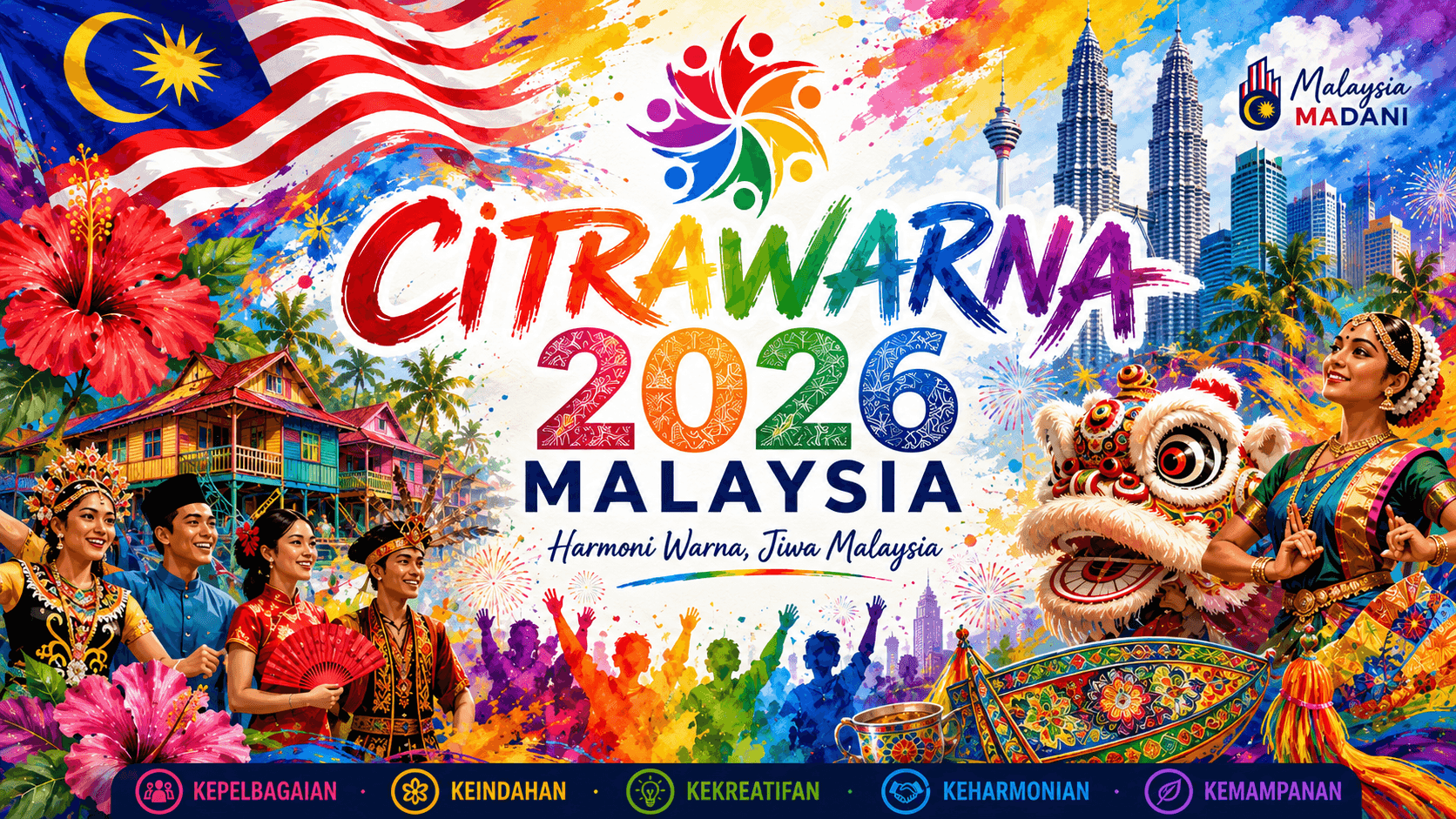
The most colourful Malaysian dishes get their colour from food, not dye. Blue nasi kerabu comes from bunga telang, the butterfly pea flower. Green kuih is pandan. Yellow nasi kunyit is turmeric, pink sirap bandung is rose syrup, brown cendol threads are gula melaka. For a Citrawarna-inspired spread, you build around those naturally vivid dishes — no artificial colouring needed.
The timing is the point. Citrawarna 2026 — "Colours of Malaysia: The Rhythm. The Soul. The Nation." — runs 24 to 26 July at Dataran Merdeka, with the Colours of Parade on the Saturday night. It's organised by the Ministry of Tourism, Arts and Culture (MOTAC) and has run every year since 1999, built specifically to put traditional arts, dance, handicrafts and cuisine from all 14 states on one field, not a one-off tourism stunt. One of its four pillars is literally Colours of Flavour. If your office or community is doing something to tie in, the easiest hook is the food itself — Malaysian cooking is already full of colour before anyone reaches for styling props.
What Malaysian foods are naturally colourful?
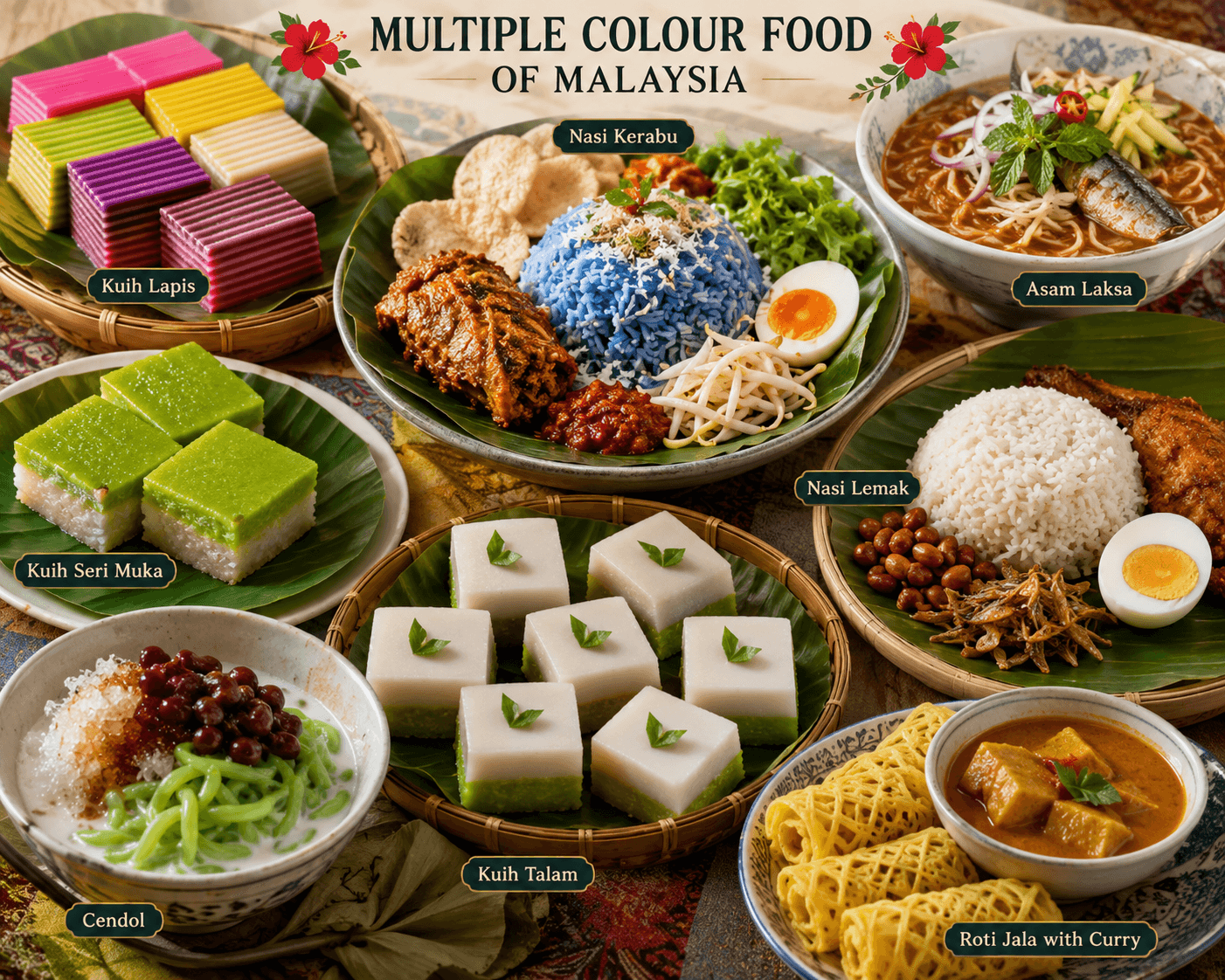
Plenty, and most of them are dishes you already know. The trick is choosing across the spectrum instead of loading up on one shade. A spread that runs blue to green to yellow to red reads as "colours of Malaysia" on sight — which is the whole idea. Here's a working palette to pull from:
- Blue: nasi kerabu (Kelantan blue rice), pulut tai tai served with kaya — both tinted by butterfly pea flower
- Green: kuih seri muka, ondeh-ondeh, tepung pelita, kuih ketayap and cendol, all coloured by pandan
- Yellow: nasi kunyit, nasi minyak and turmeric-yellow rendang or ayam masak kunyit
- Red and orange: ayam masak merah, sambal-forward dishes, ang ku kuih, and nasi tomato
- Pink and purple: sirap bandung, pulut inti, and anything built on dragon fruit or ube
- Rainbow in one dish: kuih lapis — the layered steamed cake that is a colour showcase on its own
Nasi kerabu is the one people underestimate. It is not just striking to look at — that blue rice, herbs, salted egg, keropok and budu on one plate — it also does the cultural-showcase work on its own, which is exactly what a Citrawarna tie-in wants. If you serve one hero dish, make it that.
Where do the colours in Malaysian food come from?
Almost entirely from plants. Butterfly pea flower (bunga telang) steeped in water gives that deep blue; add a squeeze of lime and it turns purple, which is chemistry, not a gimmick. Pandan leaf blended and strained is the green in most traditional kuih. Turmeric (kunyit) does the yellows, gula melaka the caramel browns, and rose syrup the pink in bandung. Beetroot and dragon fruit show up in newer fusion kuih for reds and magentas.
This matters when you brief a caterer. Ask whether the colour is natural or from food dye — good traditional kuih makers use bunga telang and pandan, and it is worth confirming, because a naturally coloured spread is a better story to tell your guests and photographs with more depth than the flat tones artificial colouring gives you.
How do you build a Citrawarna-inspired catering spread?
Start with one coloured rice as the anchor, add two or three coloured mains, and let a kuih platter carry the rest of the spectrum. Kuih is where colour is cheapest to get right — a single tray of assorted kuih-muih covers half the rainbow for a fraction of what a premium main costs. Then a coloured drink station finishes it. Here is a spread that holds together:
- Hero rice: nasi kerabu for the blue, or nasi kunyit if you want yellow as the base
- Mains: ayam masak merah (red), a turmeric or rendang dish (brown-gold), plus one vegetable kerabu salad for green and crunch
- Kuih platter: kuih lapis, seri muka, ondeh-ondeh and ang ku kuih — four colours in one tray
- Snacking layer: keropok, otak-otak and curry puffs to break up the sweetness
- Drinks: sirap bandung or a butterfly-pea cooler, both of which land in the colour theme instead of fighting it
Because this is a Malaysian-heritage spread aimed at a mixed crowd, start from halal-certified caterers — most traditional-kuih and nasi kerabu specialists already are, but confirm it rather than assume. If you would rather have the full range plated and served properly for a bigger crowd, a full-service catering setup gives you the staffing and chafing dishes to keep everything at temperature across a two- to three-hour event.
Colour fades. Butterfly-pea blue and pandan green are at their brightest fresh and dull a little as dishes sit, and cut fruit browns. Ask your caterer to plate the most colour-dependent items closest to serving time, and keep the kuih platter — which holds its colour best — as your visual anchor for the whole event.
How much does a themed Malaysian catering spread cost?
A themed Malaysian buffet spread usually runs RM25 to RM50 per pax, and a colourful one does not cost more than a plain one — the colour comes from ingredients you would use anyway. Where a themed spread adds cost is styling: batik runners, bunga telang garnishes, signage naming each dish. That is usually a flat setup fee on top of the per-pax rate, so ask what is included before comparing quotes. Our per-pax catering price guide breaks down what actually pushes a Malaysian catering quote up or down.
One honest caveat: nasi kerabu and good traditional kuih are made by specialists, not every general caterer keeps them on the standard menu. If a coloured spread is the whole point of your event, shortlist caterers who already show these dishes rather than asking a Western-buffet vendor to improvise them.
This is also an opening for caterers, not just planners
A 27-year-old MOTAC festival built around all 14 states isn't a trend a caterer needs to invent a story for — the story already exists. A Kelantanese kitchen that already makes nasi kerabu properly, a Nyonya kuih maker in Melaka, a Sarawakian or Sabahan kitchen doing something most West Malaysian menus never touch — each of those is a real regional angle, and Citrawarna gives it a calendar reason to be sold as a limited-run spread instead of buried on page three of a standard buffet menu.
If your kitchen has a regional specialty, a short-run "Colours of Malaysia" package timed around 24–26 July is a low-effort way to stand out on a caterer listing — you're not building a new menu, just naming and pricing what you already make well. Listing it with the real story behind the colour (bunga telang for the blue, pandan for the green, kunyit for the yellow) sells harder than a generic buffet description.
GatherPlate, a Malaysian catering marketplace, lets you browse caterers who do traditional Malaysian spreads with upfront per-pax pricing, so you can find one that already does nasi kerabu and a proper kuih platter well before Citrawarna weekend — and it's just as easy for a caterer with the right regional menu to list one and get found for it.
Frequently asked questions
What is the most colourful Malaysian dish?
Nasi kerabu is the standout — its blue rice comes from butterfly pea flower and it is plated with herbs, salted egg, keropok and budu. For a single dish that shows the widest range of colour, kuih lapis has every shade of the rainbow layered into one steamed cake.
Is the blue colour in nasi kerabu artificial?
No, in traditional versions it comes from bunga telang (butterfly pea flower) steeped in water. It is fully natural. Some mass-produced versions use food dye instead, so ask your caterer which they use if a natural spread matters to you.
How much does a themed Malaysian catering spread cost per pax?
Usually RM25 to RM50 per pax, similar to a standard buffet, since the colour comes from normal ingredients. Themed styling — runners, garnishes, dish signage — is typically a separate flat setup fee, so confirm what is included before comparing quotes.
When and where is Citrawarna 2026?
Citrawarna 2026 runs 24 to 26 July 2026 at Dataran Merdeka, Kuala Lumpur, with free admission. The flagship Colours of Parade is on Saturday, 25 July, from 8:00 PM.