What a Mocktail Bar Actually Costs in Malaysia
We ran the drinks bar at the 16th HKL Vascular Conference with Chillaaa Club. The real consumption numbers, cost per cup against published package prices, why alcohol-free bars took over Malaysian events, and the difference between Muslim friendly and certified halal.
By Su Hui · 7 September 2026 · 6 min read
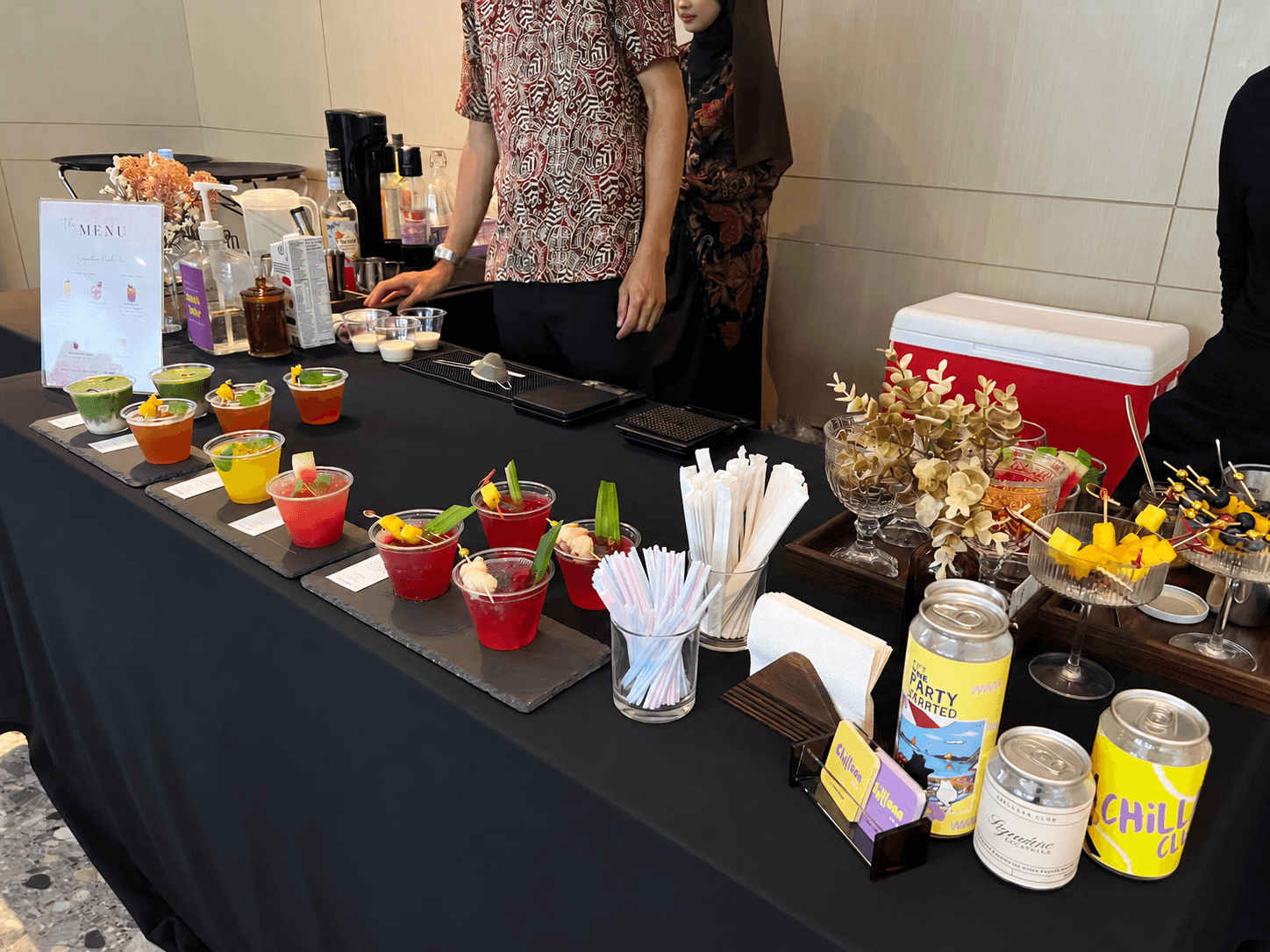
The 16th HKL Vascular Conference ran from 1 to 4 September 2026 at the Renaissance Kuala Lumpur. Four days of aortic reconstruction sessions, endovascular technique talks and CPD points, with a few hundred vascular surgeons, interventional radiologists and allied health staff moving between halls.
We ran a mocktail bar/live station with Chillaaa Club. The part worth writing about is not the menu. It is that between sessions, the bar consistently drew a bigger crowd than the coffee station a few metres away.
This post is the numbers behind that. What we ordered, what it works out to per cup, and how to size one for your own event without guessing. Almost nobody publishes this, which is why comparing beverage quotes in Malaysia is so miserable.
Start with cups, not guests
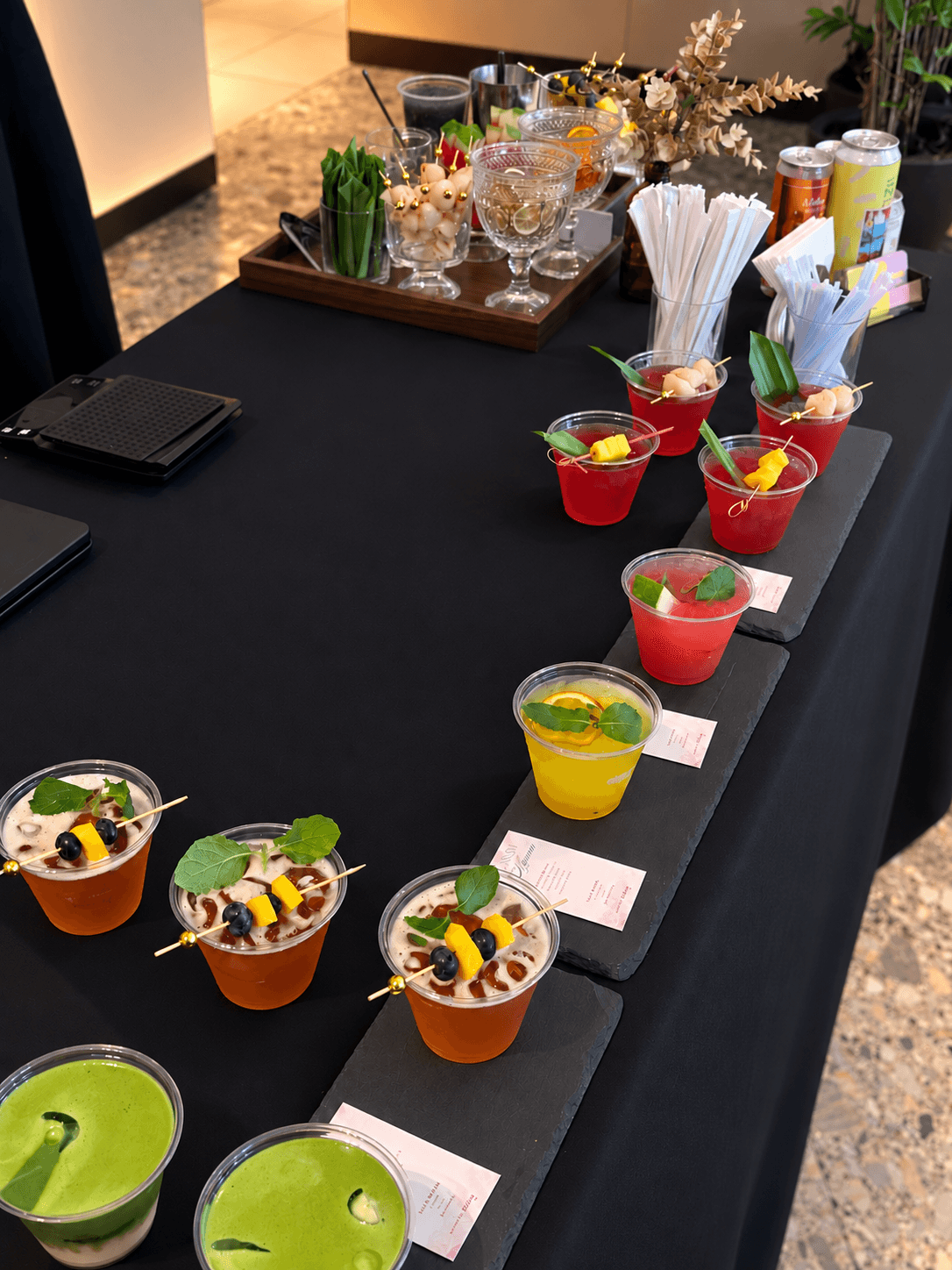
The mistake every first-time organiser makes is budgeting one drink per person. For a 300 guest event running seven hours, our recommendation is 500 cups.
- About 1.7 drinks per guest across the whole event, not one
- Roughly 70 cups an hour over a seven hour service
- One drink leaving the bar every 50 seconds, averaged out
The 1.7 figure is the useful one. It is not 1.0, because people come back, which is the entire point of having a bar rather than a dispenser. It is not 3.0 either, because attendance is staggered and a good number of guests never walk over at all. Across long-format events the number lands stubbornly close to 1.7, and you can plan against it.
Quick formula: guests multiplied by 1.7 gives your cup count. 100 guests needs around 170 cups. 250 guests needs around 425. Add 10 percent if your event runs past eight hours or the venue is outdoors and hot.
The published package prices
Staffed bar pricing from Chillaaa Club's current GatherPlate listing, in full and without a quote thread:
- Essential: ~roughly RM805 for 50 to 100 guests, RM1,656 for 200 to 300
- Premium: ~roughly RM868 for 50 to 100 guests, RM1,868 for 200 to 300
- Ultimate: ~roughly RM1,035 for 50 to 100 guests, RM2,173 for 200 to 300
- Cold Brew Coffee Experience: ~roughly RM977 to RM1,811 depending on size
- Espresso Coffee Bar:~roughly RM1,552 to RM2,329 depending on size
Cost per cup, which is the number that matters
Divide the 200 to 300 guest packages by our 500 cup recommendation and the pricing stops being abstract:
- Essential at RM1,656: ~roughly RM3.31 a cup
- Premium at RM1,868:~roughly RM3.74 a cup
- Ultimate at RM2,173:~roughly RM4.35 a cup
A canned soft drink costs RM2.50 to RM3.50 at retail, and a good deal more once a hotel puts it on a banquet order form. So a fresh mocktail, built to order with real fruit and herbs by a bartender standing at your event for seven hours, costs about the same as handing someone a can.
Once you price it per cup instead of per package, the decision stops being a splurge and starts being a swap.
The bar slot at Malaysian events has been empty for years
At most Malaysian corporate events, hospital conferences and weddings, alcohol is simply not on the table. Not as a compromise anyone negotiated, just as the default. So the room gets a food line, a coffee urn, and after that, nothing.
Event playbooks written elsewhere assume a bar carries the social weight of the day. It is where people stand when they are not sitting, where strangers start talking without needing a reason, and where most of the candid photos come from. Malaysian events have been asking the coffee break to do that job. Coffee breaks are efficient. They are not social.
A mocktail bar does not replace a bar here. It fills a slot that was sitting empty.
Halal is the starting point, not the selling point
Searches for halal mocktail bars have climbed, and the phrasing undersells what is going on. For a hospital conference or a Muslim wedding, alcohol-free is not a feature anyone is impressed by. It is the entry requirement, and every option already clears it. What gets the booking is the theatre: fresh fruit, herbs, syrups, proper glassware, someone building the drink while you talk to them. Catering has always had one moment like this, the live satay grill or the pasta station, and it is always the queue people are happy to stand in.
Halal and alcohol-free are not the same claim. A drinks vendor can be entirely alcohol-free and still not hold JAKIM certification, which covers ingredients, premises and handling rather than just the menu. Chillaaa Club is listed on GatherPlate as Muslim friendly. If your event needs certified halal on paper, for a government booking or a hospital procurement form, ask any vendor for the certificate before you book.
Demand is not a trickle, it is four spikes
The seventy cups an hour average is honest and also slightly misleading. Conference demand is not spread evenly. It arrives in four brutal windows when the halls empty at once, then goes quiet.
If roughly 60 percent of those 500 cups land inside four fifteen minute breaks, that is 300 cups across 60 minutes of actual service, or about five drinks a minute at peak. A bar staffed for the seventy-an-hour average is understaffed four times a day, and the queue at 10:45am is what people remember.
- Send the vendor your session schedule, not just the start time. They will staff the spikes rather than the average.
- Do not put the bar next to the coffee station. It splits one crowd into two queues facing each other in the same corridor. Put it where people already loiter with nothing to do, near the poster boards or registration, and it does double duty.
- Ask for a pre-batched option for the breaks. Made to order is the draw, but a tray of ready-poured house drinks clears the first thirty people while the bartender works.
Where it is worth the line item
Conferences and CPD events are the obvious fit: the day is long, delegates are standing anyway, and nothing else is competing for that budget. Weddings are the other one, particularly Muslim weddings where the drinks table has traditionally been a dispenser of sirap and a stack of cups. It also works well for product launches, open houses and corporate dinners.
Booking one
Chillaaa Club runs in klang valley, covering 25 to 300 guests with on-site bartending, delivery or pickup. They ask for one week of notice, and in peak season it fills faster than that. Slots are booked straight from the listing: pick your date, pick the package, pay. No quote thread to chase, because the calendar on the listing is the real one.
Catering gets judged on the food. Events get remembered for where people stood. Those are two different problems, and for a long time in Malaysia only one of them had a budget line.