Outdoor Catering in Malaysian Weather: Heat, Rain and the One Hour Rule
The two hour buffet rule most people half remember was written for an air conditioned room. Outdoors in Malaysian heat it halves. Here is what that changes about how you order, which dishes survive, and how to plan for rain that is not a maybe.
By GatherPlate Team · 19 August 2026 · 6 min read

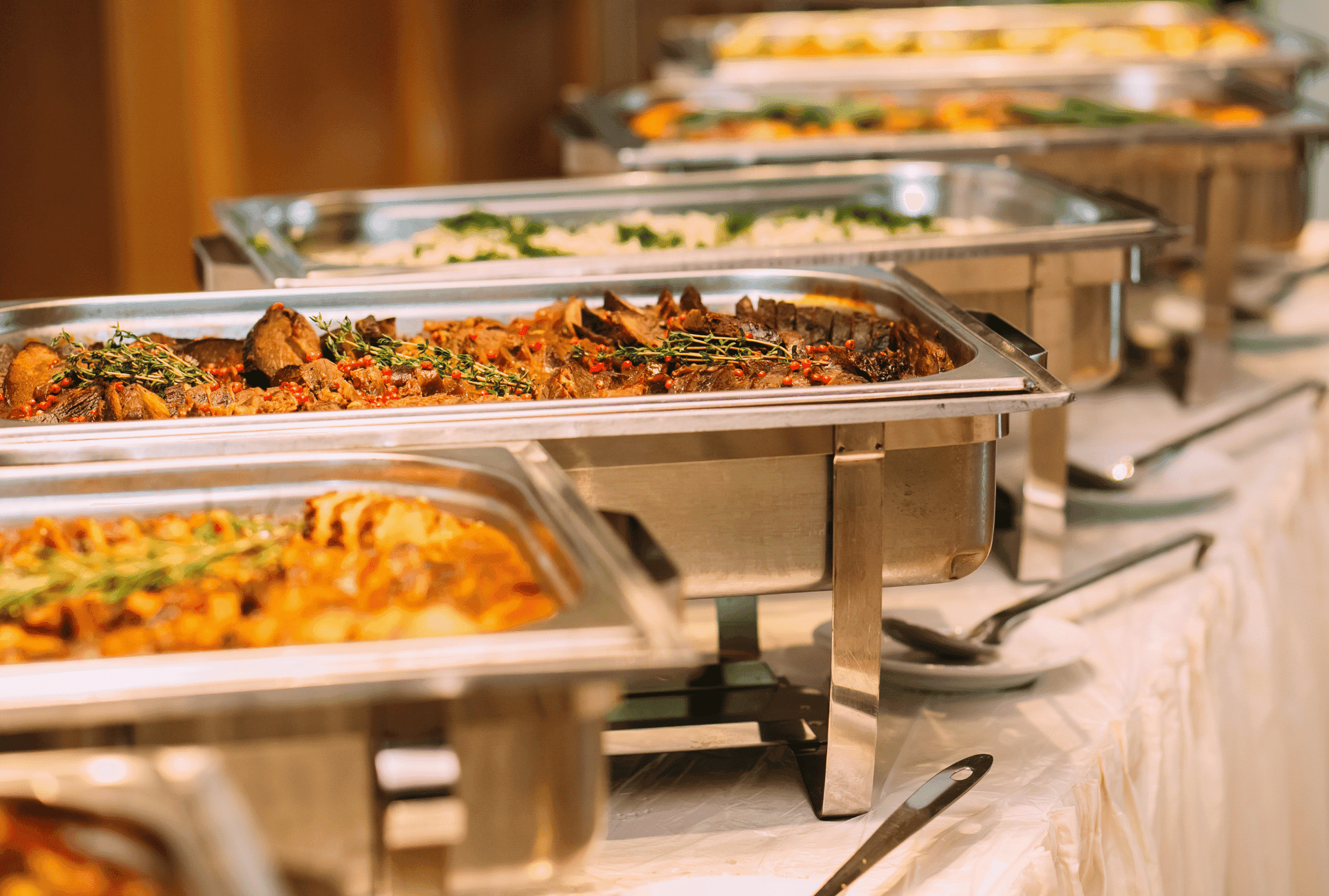
The food arrives at eleven for a one o'clock event, because that is when the caterer could deliver. It gets laid out under a canopy in the garden. By half past one, when the last guests finally reach the table, that rendang has been sitting in thirty three degree air for two and a half hours.
Nothing looks wrong. That is the problem with heat and food. It is the one part of outdoor event planning where the thing you cannot see is the thing that matters, and where the rule most people vaguely remember is the wrong rule for this country.
The two hour rule is a one hour rule here
The standard food safety guidance is that cooked food should not sit out of temperature control for more than two hours. Most people have heard that number. What gets left off is the second half of the sentence.
Above roughly 32°C ambient, the limit halves to one hour. Kuala Lumpur spends a good part of the year above that, and a canopy in direct sun sits hotter still. If you are catering outdoors here, plan around one hour, not two.
The reason is the danger zone: roughly 4°C to 60°C, where bacteria multiply fastest. Hot food held properly stays above 60°C and cold food below 4°C. Everything laid out on a table in the open is somewhere in between and heading towards the middle. The guidance is set out plainly by the CDC on serving food safely.
None of this means outdoor catering is a bad idea. It means the clock starts when the food leaves temperature control, not when your guests arrive, and you should be the one deciding when that happens.
What that changes about how you order
- Time the delivery to the eating, not to your convenience. An hour of buffer feels safer and is the opposite.
- Ask for the food to come out in waves. Half the trays at the start, half held back and swapped in. Most caterers will do this if you ask when ordering.
- Keep the holding area indoors or deeply shaded, and bring food out to the table rather than laying everything out at once.
- Consider meal boxes for a long outdoor event. Packed portions handed out at a fixed moment remove the sitting-out problem entirely, which is why they suit picnics and site events.
- Order fewer dishes in deeper trays. Deep trays hold heat longer and the line moves faster, so the food spends less time exposed.
If the event runs long or spreads across a field, meal box caterers are usually the more sensible answer than a buffet you have to guard.
What survives the heat and what does not
This is a matter of degree rather than a list of forbidden foods, and your caterer will know their own dishes best. As a rough ordering, the higher risk items are the ones that are moist, protein rich and served without further cooking.
- Watch closely: seafood, anything bound with mayonnaise or cream, cut fruit, and gravies left uncovered in the sun.
- More forgiving: dry fried items, breads and pastries, whole fruit, and anything served at ambient temperature by design.
- Drinks need ice you did not plan for. Estimate the ice, then double it. This is the single most common shortfall at an outdoor event.
When in doubt, ask the caterer directly which dishes on their menu they would not choose for an outdoor midday event. A good one will tell you straight, and will often suggest a swap that costs nothing.
Rain is not a maybe

Everyone plans the food and treats the weather as luck. In this climate an afternoon thunderstorm is close to routine, so the useful question is not whether it rains but what happens to the food when it does.
- Where does the buffet move to? Decide this before the day, not while trays are getting wet.
- Canopies need drainage and weight. Water pools on a flat canopy and comes down all at once, usually onto a table.
- Wind matters more than rain. It takes the covers off, cools the chafing fuel and blows out flames.
- Power and cables. Anything electric outdoors needs a plan for wet ground.
- Who moves it? If the caterer has already left, moving a buffet is your job. Confirm whether staff stay for the service.
The cheapest rain plan is a smaller footprint. A buffet that fits under one canopy can be moved by three people in five minutes. One spread across three tables cannot be moved at all.
Ask your caterer these before you book
- What time will you deliver, and can it be closer to the serving time?
- Can you hold half the food back and refresh the trays partway through?
- Do your staff stay for the service, or do you drop and go?
- Which of these dishes would you avoid for an outdoor midday event?
- Do you bring covers for the trays, and how much ice comes with the drinks?
- If it rains and we move indoors, does anything about your setup change?
Frequently asked questions
How long can catered food sit out at an outdoor event in Malaysia?
Plan for one hour rather than two. The commonly quoted two hour limit applies at normal indoor room temperature. Once the surrounding air is above about 32°C, which is most of a Malaysian afternoon, standard guidance halves that window to one hour. Food held properly hot above 60°C or properly cold below 4°C is a different situation, but a tray sitting on an open table is not.
Should I choose a buffet or meal boxes for an outdoor event?
Meal boxes handle heat and rain better, because the food is sealed, portioned and handed out at one moment rather than sitting exposed. A buffet is still fine for a shorter event with shade and a caterer who stays to run it. The longer the event and the more spread out the guests, the more boxes make sense.
Can leftovers from an outdoor event be kept?
Food that has been sitting out in the heat past that window should not be taken home and eaten later, however good it looks. If you want people to take food away, the safe way is to ask the caterer for separately packed portions kept aside from the buffet rather than packing up what is left on the table.
Your outdoor checklist
- Set delivery close to serving, not early.
- Plan the food for a one hour exposure window.
- Keep a shaded holding area and bring trays out in waves.
- Decide the rain relocation before the day and keep the footprint small.
- Double the ice.
- Ask which dishes the caterer would avoid outdoors, and swap them.
Get those six right and outdoor catering is genuinely lovely. Get the timing wrong and the food looks perfect the entire time it is becoming a problem.