Small Party Catering in Malaysia: Planning for 10–30 Pax
Ten friends at home or thirty guests in a function room? Plan the menu, compare party trays, meal boxes and mini buffets, and check what the order needs to include.
By GatherPlate Team · 16 September 2026 · 8 min read
Ten people are coming over for lunch. You want enough food to share, but you do not need a row of buffet warmers in the living room or an order sized for fifty guests.
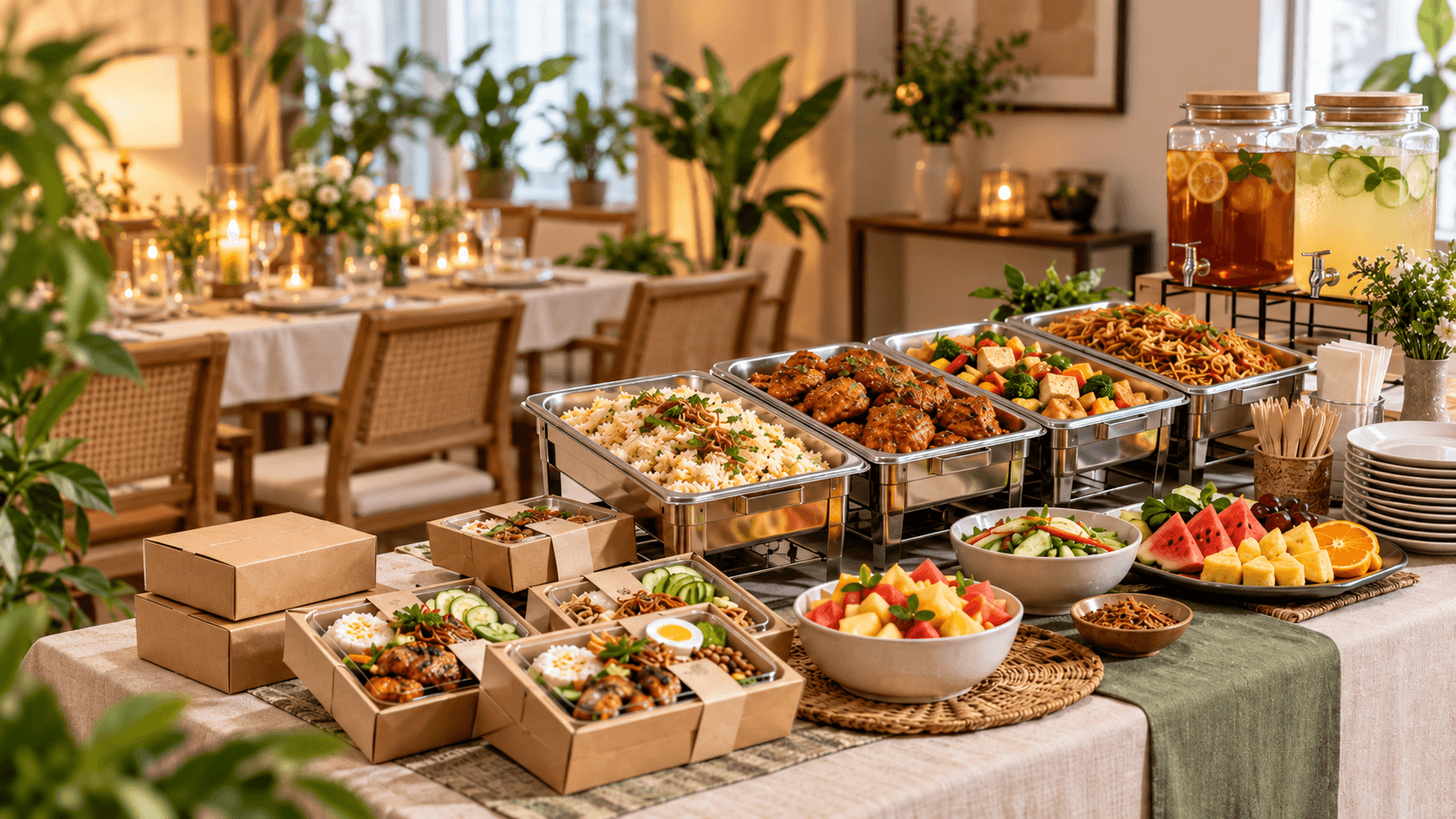
For a small party, start with the meal you want to serve and the space you have. Party trays might suit a relaxed lunch at home. Meal boxes make portions straightforward. A mini buffet gives guests more choice, provided you have somewhere to put it.
Planning for just 10 pax? You can use GatherPlate to look for smaller-group catering and check the minimum on each current listing. What you can book depends on the menu, your address and the date. A small guest list is a reason to look for a suitable format, not automatically order more food.
Here are three sample plans for 10, 20 and 30 guests. They are menu ideas to adapt, not vendor packages or quotations. The useful comparison is what each arrangement asks of you as the host.
Party trays, meal boxes or a mini buffet?
- Party trays: shared dishes placed on a table for guests to help themselves. Ask how many meal portions each tray provides, particularly if you are ordering several dishes to make up one lunch.
- Meal boxes: an individual meal for each guest. Useful when space is limited, food needs to be handed out quickly or people will eat at different tables.
- Mini buffets: a shared spread of several dishes for a smaller gathering. Check what the term includes. Food delivery alone is different from a setup with warmers, tables and an attendant.
Guest count does not decide the format on its own. Twenty people seated for an office lunch may find meal boxes easier; the same twenty gathered around a dining table might prefer shared dishes.
For 10 guests: a shared lunch at home
Imagine a weekend lunch with ten adults seated around a table. You have room for a few serving dishes, and someone can receive the food shortly before the meal.
- Suggested menu: rice or noodles, one chicken dish, one tofu or bean dish, vegetables and cut fruit.
- Quantity brief: ask for the dishes to make up ten complete lunches together. Check the portion count for each tray rather than buying every dish in a ten-person size without discussing the overall meal.
- Drinks: provide drinking water and one optional drink. Confirm the quantity separately if ordering drinks with the food.
- Serving: use a stable table or sideboard, with a separate utensil for each dish. Check whether you need to supply plates, cutlery and napkins.
- Host’s job: receive the order, set it out, help guests serve and clear up afterwards.
If anyone needs a vegetarian meal, ask for the rice, tofu dish and vegetables to be prepared suitably and reserve a complete portion. A vegetable dish is not necessarily vegetarian once sauces and stock are included.
For this gathering, a compact spread can be enough. Another tray of snacks may be less useful than making sure everyone gets a proper main meal. If a caterer’s tray sizes leave you ordering far more than you need, compare a smaller sharing set or individual meals instead.
For 20 guests: meal boxes with a clear count
Now imagine an office birthday lunch or a gathering where people will eat in several rooms. There is no convenient place for a buffet queue.
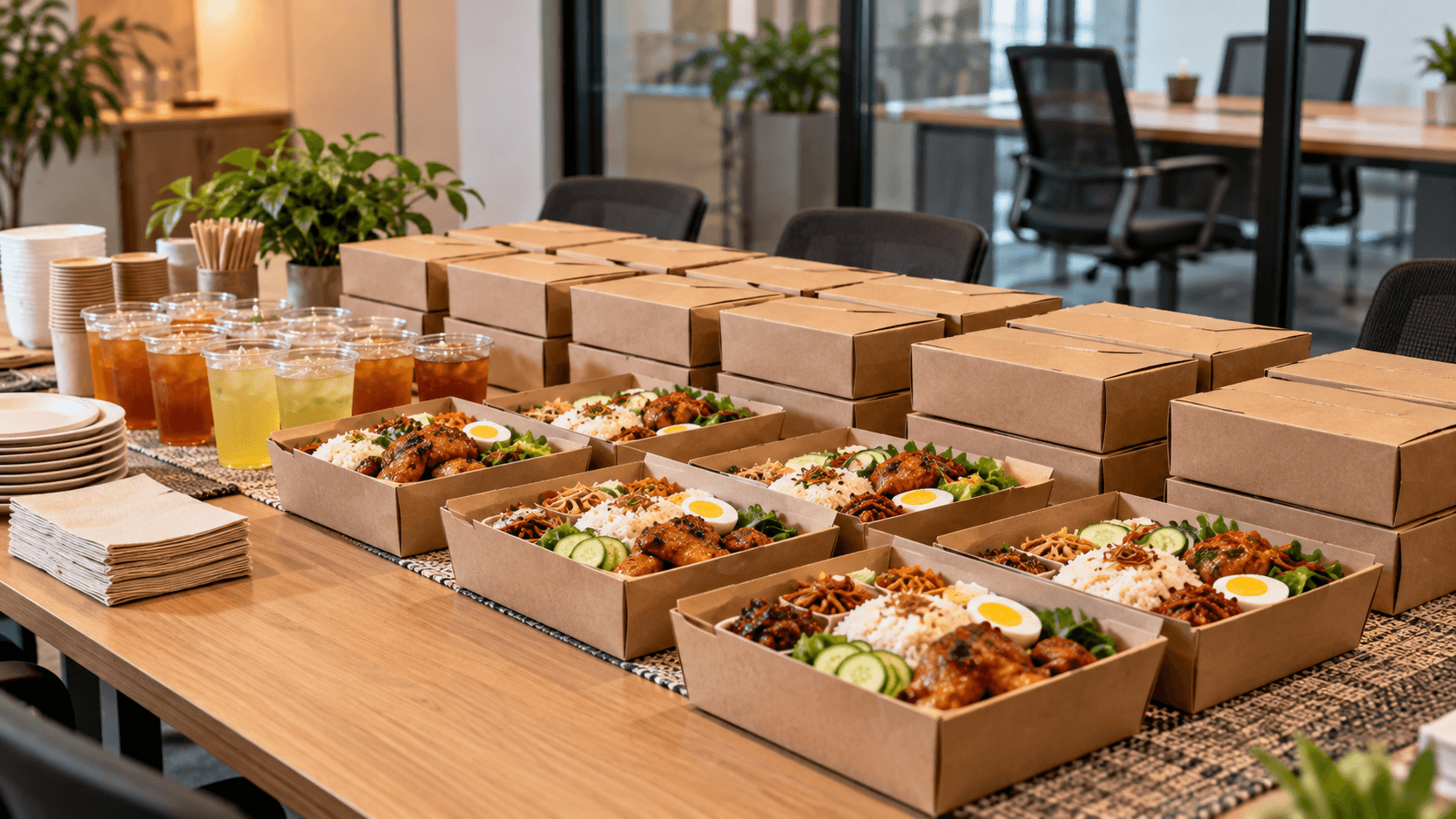
- Suggested menu: a rice-based meal with a main protein and vegetables, with a suitable alternative for guests who need one.
- Quantity brief: twenty complete meals in total. For example, eighteen standard meals and two vegetarian meals if that matches your guest list. The two alternatives replace standard meals; they are not automatically extra orders.
- Drinks and dessert: arrange these separately unless the chosen meal includes them. If there is a birthday cake, you may not need another dessert.
- Serving: have one place for handing out meals, with dietary orders clearly identified and kept for the intended guests.
- Host’s job: check the quantities on arrival, hand out the right meals and provide somewhere to dispose of the packaging.
Ask whether the order can be split between different mains and whether each choice has its own minimum. Twenty meals in total may meet the package minimum while a split of ten chicken and ten fish does not meet a per-dish requirement.
Meal boxes simplify counting, but they do not remove the need to check portions. Tell the caterer whether this is lunch, a light supper or food between activities so they can suggest an appropriate meal.
For 30 guests: a compact buffet-style spread
For a family celebration or a condo function-room party, a shared spread gives guests room to choose. Assume you have a suitable food table, seating and a clear path between the two.
- Suggested menu: one rice or noodle dish, two mains, one vegetable dish, fruit or a simple dessert, and drinks.
- Quantity brief: a complete meal for thirty guests, with the adult-and-child breakdown and dietary requirements supplied to the caterer. Ask how they divide portions across the dishes.
- Service choice: compare a delivery-only spread with setup or staffed service, where available. Decide who will replenish dishes and clear the eating area.
- Equipment: confirm buffet tables, serving utensils, any required holding equipment, plates, cutlery, cups and rubbish arrangements.
- Access: agree the handover point, loading route and who brings the food into the room. Check building requirements before promising the vendor access.
- Host’s job: have someone receive the order and coordinate setup, then make sure cleanup and equipment collection fit the venue’s booking window.
Thirty guests do not automatically require a full buffet team. Delivery can work if you have enough help. Staffed service may be worth considering if the host would otherwise spend the party looking after the food.
Keep drinks away from the busiest part of the serving line. If children will be playing nearby, leave a clear route around hot dishes and equipment rather than squeezing everything against the entrance.
Check the minimum before comparing the price
There are several different things a caterer might mean by a minimum order:
- Guest minimum: the smallest headcount the package accepts.
- Minimum spend: the amount the food order must reach.
- Per-item minimum: the smallest quantity of each dish, tray or meal choice.
- Service minimum: a separate requirement for setup, staff or equipment.
Ask which ones apply to your selection. An order might meet the food minimum but not qualify for staffed service, or meet the overall spend while still needing more units of a particular dish.
Suppose you have thirty guests but a buffet must be paid for at a minimum of fifty. That means budgeting for twenty additional places. This is an illustrative situation, not a rule for any named caterer. Compare that minimum bill with an order that fits your actual group.
Use the same guest count and meal requirements when comparing options. A snack tray, a complete boxed lunch and a staffed buffet are different purchases, even when all three display a per-person price.
Build the budget around the complete order
Start with the food, then add anything needed to get it to your guests and serve it. Keep these items separate when checking a quotation or checkout summary:
- Food quantities and any menu upgrades.
- Delivery or collection charges.
- Setup, equipment hire and staffing, if selected.
- Drinks, dessert and tableware that are not included.
- Any applicable taxes, access charges or extra service time.
Delivery deserves particular attention with a small order. A fixed charge is spread across fewer people when ten guests are eating than when thirty are. Check the amount for your actual address rather than using someone else’s event as a guide.
If you order savouries, desserts and drinks from different vendors, allow for separate deliveries and arrival windows. There may be good reasons to do it, but check the complete cost and decide who will receive each order.
When a full buffet is more than you need
A full buffet makes sense when its service and equipment solve a problem for your event. It becomes less practical when the setup occupies most of the room, the minimum order is far above your headcount or collection cannot fit within your venue booking.
At home, start by measuring the surface you can use for food. In a function room, ask what furniture is available and when suppliers can enter. A photo of the space and a clear access window can be more useful to the caterer than simply saying the party is small.
For delivery-only food, agree the arrival time and ask for serving and storage instructions. For on-site service, agree setup, service and collection times separately. Do not assume that a two-hour party means the vendor needs access for only two hours.
What to send before you book
A useful enquiry is short but specific. Include:
- Your date, meal time and full event address.
- The number of adults and children, with dietary requirements.
- Whether you want shared trays, individual meals or a buffet-style spread.
- What the venue provides and what you need the caterer to supply.
- Your total budget, including delivery and any service.
- The deadline for confirming quantities, and any restrictions on access or collection.
That gives the caterer enough information to recommend portions and explain the minimums. It also makes it easier to compare answers without going back for a missing delivery charge or an equipment list.
Find an order that fits your gathering
Whether you are planning for ten, twenty or thirty people, start with the meal and the practical details. The aim is to feed your guests well without ordering an event setup you do not have room for.
Browse catering on GatherPlate to compare current menus, minimums and available service options. If individual portions suit the event, start with meal boxes and sets. Check the current details for your address and date before booking.
The menus above are illustrative planning ideas, not packages or price quotations. Check current prices, inclusions, minimums and availability in the listing before ordering. The cover is a vendor-supplied image from GatherPlate and does not represent the suggested menus.