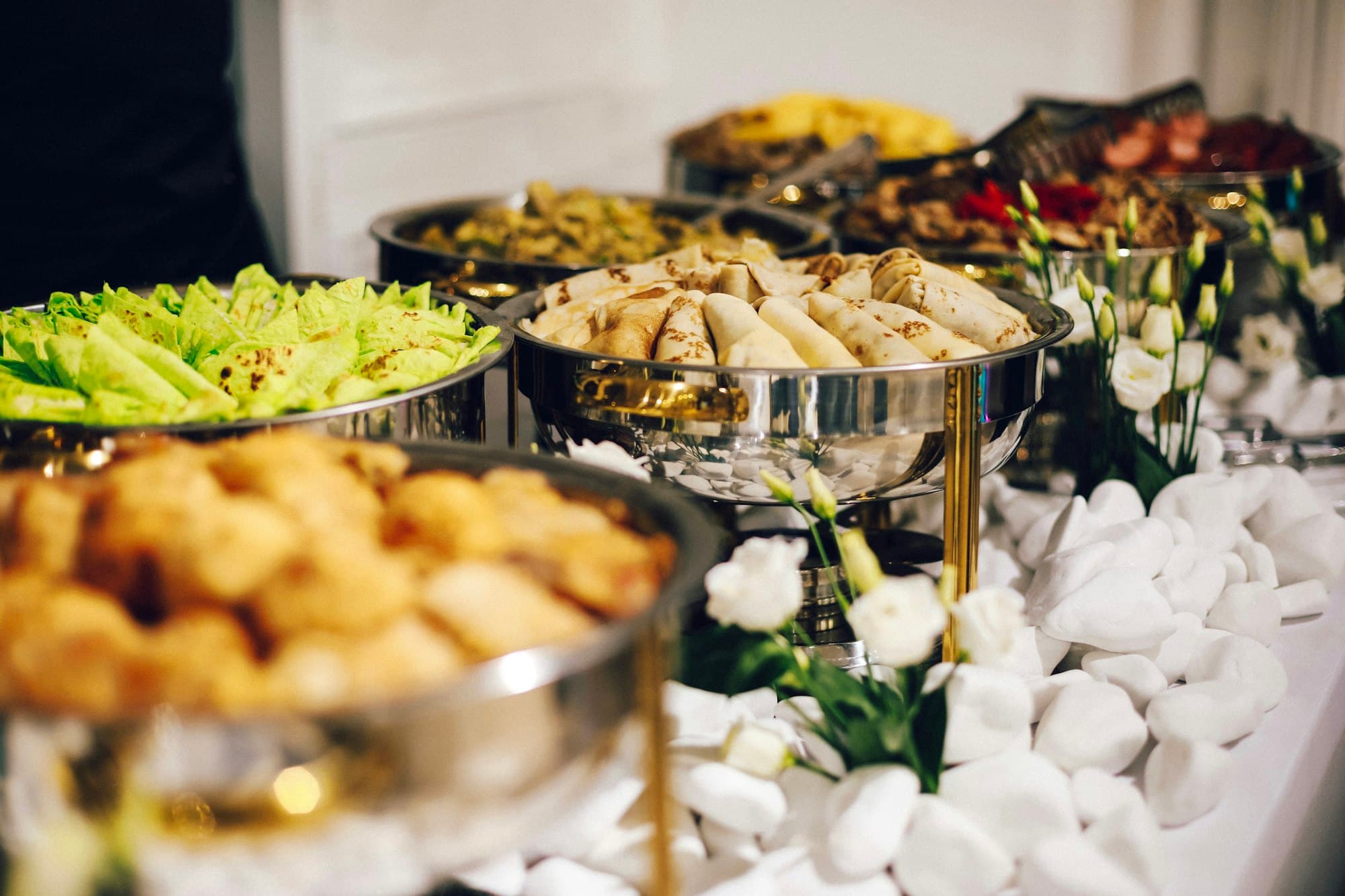
Tea Break Catering in Malaysia: What to Expect, and What to Serve Your Guests
Between sessions, the side table is the part of the day guests actually interact with. This is what a Malaysian tea break set contains, how morning and afternoon breaks differ, and what to put out when the room is full of clients.
By GatherPlate Team · 13 September 2026 · 7 min read

At most corporate events, the food is the only part of the day guests handle themselves. They sit through the presentation, take the deck away unread, and remember the twenty minutes they spent standing at a side table with a cup in one hand. In Malaysia that table has a familiar shape: kuih, something fried, and something hot to drink.
For whoever is hosting, it is the cheapest piece of hospitality on the run sheet and the one most often left to a last phone call. What follows is what a tea break set contains, how the morning and afternoon breaks differ, and what to put out when the room is clients rather than colleagues.
What a Malaysian tea break set contains
Almost every tea break package is built on the same three parts: something sweet, something savoury, and a drink. Where caterers differ is in how many pieces each guest gets and whether the drink is counted inside the set or charged beside it. Those two lines are what separate one package's price from another's.
- The sweet piece. Local kuih such as kuih lapis, seri muka, onde-onde, kuih talam or kek lapis. Otherwise cakes, pastries or a single-portion dessert.
- The savoury piece. Karipap, popiah, cucur udang, pisang goreng, spring rolls, mini sandwiches or finger food on a platter.
- The drink. Kopi O, teh tarik or plain tea, sometimes sirap bandung or a cordial. A coffee cart does the same job with more of an occasion attached.
- The usual addition. A fruit platter, which is what most hosts put next to the fried items so the table is not entirely deep fried. Malaysia is tropical, so the variety is there all year: papaya, watermelon, pineapple, honeydew and whatever is in season.
Why a local spread travels further than sandwiches
The default corporate tea break in a lot of offices is a tray of triangle sandwiches beside a flask of instant coffee. It feeds a room. It also looks like something ordered at 4pm the day before, which is usually what it is.
A local spread does more for the same money. Kuih arrives in colours, it is built to be eaten in two bites standing up, and it gives guests something to talk about that is not the agenda. Visitors from out of town remember seri muka and karipap. Nobody has ever asked a host where the sandwiches came from.
Variety reads better than volume. Three kinds of kuih at one piece each looks like a spread. Thirty pieces of the same curry puff looks like a delivery.
Morning and afternoon breaks are different jobs
Caterers usually quote a different set for each break, and the two are not interchangeable.
- Morning, around 10 or 10.30. Half the room skipped breakfast. Savoury and substantial holds them: nasi lemak bungkus, karipap, roti and kaya, pisang goreng, and coffee that is still hot when it reaches the table.
- Afternoon, around 3.30 or 4. Lunch has landed and attention is thinning. Lighter and sweeter suits the hour: kuih, cake slices, fruit, teh tarik.
- Sessions that run past five. A second savoury item does more for a tired room than another dessert.
What to serve when the guests are clients
A client briefing, a partner visit or a launch has a different constraint from an internal meeting. Guests are standing, talking, holding a cup, and often meeting the host for the first time. Food that requires a fork, a plate and a flat surface puts all of that on hold.
- Serve in single portions that fit one hand. Kuih, canapes, small pastries and skewers work. Anything needing to be cut does not.
- Avoid gravy, heavy sauces and strong smells. A curry that fills a meeting room is remembered for the wrong reason.
- Ask what the package includes beyond the food. Cups, serving trays, tongs and a presentable table setup are not a given, and a good table is half the impression.
- Keep drinks at a separate point from the food, so one queue does not become two.
For a client-facing break with room to spare, a live station or a cart changes the register entirely. Apam balik cooked in front of guests, or teh tarik pulled at a counter, gives people a reason to gather and a reason to stay talking after they have eaten.
Ordering for a full day conference
A seminar or training day is two tea breaks and a lunch. The breaks are the part that goes wrong, because the agenda moves during the day and the delivery time does not.
- Give the caterer the break times, not the event start time. It is the detail most often left out of a booking.
- Ask for setup to be finished before the break begins. A twenty minute break loses a quarter of itself to trays still being laid out.
- Check the room for a side table, a bin and somewhere to put used cups. This usually takes some coordination with venue management, since a hotel function room will not always provide one unless it is requested, and some venues have their own rules about outside food.
- Order the morning and afternoon sets separately where the caterer allows it, so the second break is not a repeat of the first.
- Keep the drinks station away from cabling and plug points.
Label the savoury items, especially anything containing prawn, peanut or beef. Cucur udang and rempeyek catch guests out, and few people will ask about ingredients in front of a full room.
Dietary needs on a tea break table
A tea break is easier to get right than a full meal, because much of what goes on the table already suits most diets. With an external guest list, a halal caterer is the safer default, since a host rarely knows what visitors eat. Our halal catering guide covers certified against halal friendly, which matters for government and hospital audiences.
Most sweet kuih suits vegetarians as it is. The savoury half of the table is where to check, and some vegetarians keep a stricter diet with no garlic and no onion. Caterers can be messaged before booking to confirm.
A Merdeka or Malaysia Day tea break
September is the one month when a themed tea break needs no explanation. The theme is the food itself: kuih in every colour, nasi lemak bungkus, teh tarik poured properly. For anyone hosting clients or regional colleagues during Merdeka month, it is the easiest way to put something local in front of people who have otherwise only seen the office.
How to order it
Tea break sets sit under several names on GatherPlate, so the practical route is to browse by what should be on the table: finger food, kuih, pastries, desserts or coffee. Each package page lists what is included and the minimum order, the date and start time are chosen before payment, and caterers can be messaged first to check an item. For the booking process itself, see this guide. For feeding the same room a full meal, see the office lunch guide.
Frequently asked questions
What is included in a tea break set in Malaysia?
Usually something sweet, something savoury and a drink. The sweet piece is often local kuih, a cake slice or a pastry, the savoury piece something like karipap, popiah, cucur udang or a mini sandwich, and the drink coffee or tea. The number of pieces per guest, and whether the drink sits inside the set, varies by caterer.
What should I serve clients at a tea break?
Single portions that can be eaten standing with one hand, such as kuih, canapes, small pastries or skewers. Avoid anything that has to be cut, anything with gravy, and anything that leaves a strong smell in a meeting room. Ask too what the package includes beyond food: cups, tongs and table setup are not always part of it.
What is the difference between a morning and an afternoon tea break?
A morning break feeds guests who skipped breakfast, so it leans savoury: nasi lemak bungkus, karipap, pisang goreng, hot coffee. An afternoon break follows lunch, so lighter and sweeter suits it, such as kuih, cake and fruit with teh tarik.
Is there a vegetarian option for a tea break?
Yes, and it is simpler than for a full meal, because most sweet kuih is already suitable. The savoury items are where to check, especially for vegetarians who avoid garlic and onion. Message the caterer before booking to confirm.